Showing posts with label mary shelley. Show all posts

Friday, October 11, 2024

πŸŽƒπŸ“˜πŸŽ₯Friday's Film AdaptationπŸŽ₯πŸ“˜πŸŽƒ: Frankenstein by Mary Shelley


Summary:

Frankenstein tells the story of Victor Frankenstein, a young scientist who creates a sapient creature in an unorthodox scientific experiment. Shelley started writing the story when she was 18, and the first edition was published anonymously in London on 1 January 1818, when she was 20. Her name first appeared in the second edition, which was published in Paris in 1821.

Shelley travelled through Europe in 1815, moving along the river Rhine in Germany, and stopping in Gernsheim, 17 kilometres (11 mi) away from Frankenstein Castle, where, two centuries before, an alchemist had engaged in experiments.[note She then journeyed to the region of Geneva, Switzerland, where much of the story takes place. Galvanism and occult ideas were topics of conversation for her companions, particularly for her lover and future husband Percy B. Shelley. In 1816 Mary, Percy and Lord Byron had a competition to see who could write the best horror story. After thinking for days, Shelley was inspired to write Frankenstein after imagining a scientist who created life and was horrified by what he had made.

Though Frankenstein is infused with elements of the Gothic novel and the Romantic movement, Brian Aldiss has argued for regarding it as the first true science-fiction story. In contrast to previous stories with fantastical elements resembling those of later science fiction, Aldiss states, the central character "makes a deliberate decision" and "turns to modern experiments in the laboratory" to achieve fantastic results. The novel has had a considerable influence on literature and on popular culture; it has spawned a complete genre of horror stories, films, and plays.

Since the publication of the novel, the name "Frankenstein" has often been used, erroneously, to refer to the monster, rather than to his creator/father.


Chapter 1
I am by birth a Genevese, and my family is one of the most distinguished of that republic. My ancestors had been for many years counsellors and syndics, and my father had filled several public situations with honour and reputation. He was respected by all who knew him for his integrity and indefatigable attention to public business. He passed his younger days perpetually occupied by the affairs of his country; a variety of circumstances had prevented his marrying early, nor was it until the decline of life that he became a husband and the father of a family.

As the circumstances of his marriage illustrate his character, I cannot refrain from relating them. One of his most intimate friends was a merchant who, from a flourishing state, fell, through numerous mischances, into poverty. This man, whose name was Beaufort, was of a proud and unbending disposition and could not bear to live in poverty and oblivion in the same country where he had formerly been distinguished for his rank and magnificence. Having paid his debts, therefore, in the most honourable manner, he retreated with his daughter to the town of Lucerne, where he lived unknown and in wretchedness. My father loved Beaufort with the truest friendship and was deeply grieved by his retreat in these unfortunate circumstances. He bitterly deplored the false pride which led his friend to a conduct so little worthy of the affection that united them. He lost no time in endeavouring to seek him out, with the hope of persuading him to begin the world again through his credit and assistance. Beaufort had taken effectual measures to conceal himself, and it was ten months before my father discovered his abode. Overjoyed at this discovery, he hastened to the house, which was situated in a mean street near the Reuss. But when he entered, misery and despair alone welcomed him. Beaufort had saved but a very small sum of money from the wreck of his fortunes, but it was sufficient to provide him with sustenance for some months, and in the meantime he hoped to procure some respectable employment in a merchant's house. The interval was, consequently, spent in inaction; his grief only became more deep and rankling when he had leisure for reflection, and at length it took so fast hold of his mind that at the end of three months he lay on a bed of sickness, incapable of any exertion.

His daughter attended him with the greatest tenderness, but she saw with despair that their little fund was rapidly decreasing and that there was no other prospect of support. But Caroline Beaufort possessed a mind of an uncommon mould, and her courage rose to support her in her adversity. She procured plain work; she plaited straw and by various means contrived to earn a pittance scarcely sufficient to support life.
 
Several months passed in this manner. Her father grew worse; her time was more entirely occupied in attending him; her means of subsistence decreased; and in the tenth month her father died in her arms, leaving her an orphan and a beggar. This last blow overcame her, and she knelt by Beaufort's coffin weeping bitterly, when my father entered the chamber. He came like a protecting spirit to the poor girl, who committed herself to his care; and after the interment of his friend he conducted her to Geneva and placed her under the protection of a relation. Two years after this event Caroline became his wife.

There was a considerable difference between the ages of my parents, but this circumstance seemed to unite them only closer in bonds of devoted affection. There was a sense of justice in my father's upright mind which rendered it necessary that he should approve highly to love strongly. Perhaps during former years he had suffered from the late-discovered unworthiness of one beloved and so was disposed to set a greater value on tried worth. There was a show of gratitude and worship in his attachment to my mother, differing wholly from the doting fondness of age, for it was inspired by reverence for her virtues and a desire to be the means of, in some degree, recompensing her for the sorrows she had endured, but which gave inexpressible grace to his behaviour to her. Everything was made to yield to her wishes and her convenience. He strove to shelter her, as a fair exotic is sheltered by the gardener, from every rougher wind and to surround her with all that could tend to excite pleasurable emotion in her soft and benevolent mind. Her health, and even the tranquillity of her hitherto constant spirit, had been shaken by what she had gone through. During the two years that had elapsed previous to their marriage my father had gradually relinquished all his public functions; and immediately after their union they sought the pleasant climate of Italy, and the change of scene and interest attendant on a tour through that land of wonders, as a restorative for her weakened frame.

From Italy they visited Germany and France. I, their eldest child, was born at Naples, and as an infant accompanied them in their rambles. I remained for several years their only child. Much as they were attached to each other, they seemed to draw inexhaustible stores of affection from a very mine of love to bestow them upon me. My mother's tender caresses and my father's smile of benevolent pleasure while regarding me are my first recollections. I was their plaything and their idol, and something better--their child, the innocent and helpless creature bestowed on them by heaven, whom to bring up to good, and whose future lot it was in their hands to direct to happiness or misery, according as they fulfilled their duties towards me. With this deep consciousness of what they owed towards the being to which they had given life, added to the active spirit of tenderness that animated both, it may be imagined that while during every hour of my infant life I received a lesson of patience, of charity, and of self-control, I was so guided by a silken cord that all seemed but one train of enjoyment to me. For a long time I was their only care. My mother had much desired to have a daughter, but I continued their single offspring. When I was about five years old, while making an excursion beyond the frontiers of Italy, they passed a week on the shores of the Lake of Como. Their benevolent disposition often made them enter the cottages of the poor. This, to my mother, was more than a duty; it was a necessity, a passion--remembering what she had suffered, and how she had been relieved--for her to act in her turn the guardian angel to the afflicted. During one of their walks a poor cot in the foldings of a vale attracted their notice as being singularly disconsolate, while the number of half-clothed children gathered about it spoke of penury in its worst shape. One day, when my father had gone by himself to Milan, my mother, accompanied by me, visited this abode. She found a peasant and his wife, hard working, bent down by care and labour, distributing a scanty meal to five hungry babes. Among these there was one which attracted my mother far above all the rest. She appeared of a different stock. The four others were dark-eyed, hardy little vagrants; this child was thin and very fair. Her hair was the brightest living gold, and despite the poverty of her clothing, seemed to set a crown of distinction on her head. Her brow was clear and ample, her blue eyes cloudless, and her lips and the moulding of her face so expressive of sensibility and sweetness that none could behold her without looking on her as of a distinct species, a being heaven-sent, and bearing a celestial stamp in all her features. The peasant woman, perceiving that my mother fixed eyes of wonder and admiration on this lovely girl, eagerly communicated her history. She was not her child, but the daughter of a Milanese nobleman. Her mother was a German and had died on giving her birth. The infant had been placed with these good people to nurse: they were better off then. They had not been long married, and their eldest child was but just born. The father of their charge was one of those Italians nursed in the memory of the antique glory of Italy--one among the schiavi ognor frementi, who exerted himself to obtain the liberty of his country. He became the victim of its weakness. Whether he had died or still lingered in the dungeons of Austria was not known. His property was confiscated; his child became an orphan and a beggar. She continued with her foster parents and bloomed in their rude abode, fairer than a garden rose among dark-leaved brambles. When my father returned from Milan, he found playing with me in the hall of our villa a child fairer than pictured cherub--a creature who seemed to shed radiance from her looks and whose form and motions were lighter than the chamois of the hills. The apparition was soon explained. With his permission my mother prevailed on her rustic guardians to yield their charge to her. They were fond of the sweet orphan. Her presence had seemed a blessing to them, but it would be unfair to her to keep her in poverty and want when Providence afforded her such powerful protection. They consulted their village priest, and the result was that Elizabeth Lavenza became the inmate of my parents' house--my more than sister--the beautiful and adored companion of all my occupations and my pleasures.

Everyone loved Elizabeth. The passionate and almost reverential attachment with which all regarded her became, while I shared it, my pride and my delight. On the evening previous to her being brought to my home, my mother had said playfully, "I have a pretty present for my Victor--tomorrow he shall have it." And when, on the morrow, she presented Elizabeth to me as her promised gift, I, with childish seriousness, interpreted her words literally and looked upon Elizabeth as mine--mine to protect, love, and cherish. All praises bestowed on her I received as made to a possession of my own. We called each other familiarly by the name of cousin. No word, no expression could body forth the kind of relation in which she stood to me--my more than sister, since till death she was to be mine only. 


A young scientist's attempts to create life lead to disaster when his monstrous creation comes after him.

Release Date: November 4, 1994
Release Time: 123 minutes

Director: Kenneth Branagh

Cast:
Robert De Niro as The Creation
Kenneth Branagh as Victor Frankenstein
Rory Jennings as young Victor Frankenstein
Tom Hulce as Henry Clerval
Helena Bonham Carter as Elizabeth Lavenza Frankenstein
Hannah Taylor Gordon as young Elizabeth Lavenza
Ian Holm as Baron Alphonse Frankenstein
John Cleese as Professor Waldman
Aidan Quinn as Captain Robert Walton
Richard Briers as Grandfather
Robert Hardy as Professor Krempe
Trevyn McDowell as Justine Moritz
Christina Cuttall as young Justine Moritz
Celia Imrie as Mrs. Moritz
Cherie Lunghi as Caroline Frankenstein
Ryan Smith as William Frankenstein
Charles Wyn-Davies as young William Frankenstein
Hugh Bonneville as Schiller
Jenny Galloway as Vendor's wife
Alex Lowe as Crewman
George Asprey as Policeman


Awards:
67th Academy Awards - March 27, 1995
Best Makeup - Daniel Parker, Paul Engelen, Carol Hemming - Nominated

48th BAFTAs - April 9, 1995
Best Production Design - Tim Harvey - Nominated


Trailer

Clips


1931  /  1957  /  1994


Mary Shelley
Mary Shelley (1797-1851), the only daughter of writers William Godwin and Mary Wollstonecraft, and wife of Percy Bysshe Shelley, is the critically acclaimed author of Frankenstein, Valperga, and The Last Man, in addition to many other works. Mary Shelley’s writings reflect and were influenced by a number of literary traditions including Gothic and Romantic ideals, and Frankenstein is widely regarded as the first modern work of science fiction. Today’s scholarship of Mary Shelley’s writings reveal her to be a political radical, as demonstrated though recurring themes of cooperation and sympathy, particularly among women, in her work, which are in direct conflict with the individual Romantic ideals of the eighteenth and nineteenth centuries.


Film
B&N  /  AFI  /  ALL MOVIE
WIKI  /  IMDB  /  TCM


Friday, October 27, 2023

πŸŽƒπŸ“˜πŸŽ₯Friday's Film AdaptationπŸŽ₯πŸ“˜πŸŽƒ: Frankenstein by Mary Shelley


Summary:
Mary Shelley began writing Frankenstein when she was only eighteen. At once a Gothic thriller, a passionate romance, and a cautionary tale about the dangers of science, Frankenstein tells the story of committed science student Victor Frankenstein. Obsessed with discovering the cause of generation and life and bestowing animation upon lifeless matter, Frankenstein assembles a human being from stolen body parts but; upon bringing it to life, he recoils in horror at the creature's hideousness. Tormented by isolation and loneliness, the once-innocent creature turns to evil and unleashes a campaign of murderous revenge against his creator, Frankenstein.

Frankenstein, an instant bestseller and an important ancestor of both the horror and science fiction genres, not only tells a terrifying story, but also raises profound, disturbing questions about the very nature of life and the place of humankind within the cosmos: What does it mean to be human? What responsibilities do we have to each other? How far can we go in tampering with Nature? In our age, filled with news of organ donation genetic engineering, and bio-terrorism, these questions are more relevant than ever.


Chapter 16
“Cursed, cursed creator! Why did I live? Why, in that instant, did I not extinguish the spark of existence which you had so wantonly bestowed? I know not; despair had not yet taken possession of me; my feelings were those of rage and revenge. I could with pleasure have destroyed the cottage and its inhabitants and have glutted myself with their shrieks and misery.

“When night came I quitted my retreat and wandered in the wood; and now, no longer restrained by the fear of discovery, I gave vent to my anguish in fearful howlings. I was like a wild beast that had broken the toils, destroying the objects that obstructed me and ranging through the wood with a stag-like swiftness. Oh! What a miserable night I passed! The cold stars shone in mockery, and the bare trees waved their branches above me; now and then the sweet voice of a bird burst forth amidst the universal stillness. All, save I, were at rest or in enjoyment; I, like the arch-fiend, bore a hell within me, and finding myself unsympathized with, wished to tear up the trees, spread havoc and destruction around me, and then to have sat down and enjoyed the ruin.

“But this was a luxury of sensation that could not endure; I became fatigued with excess of bodily exertion and sank on the damp grass in the sick impotence of despair. There was none among the myriads of men that existed who would pity or assist me; and should I feel kindness towards my enemies? No; from that moment I declared everlasting war against the species, and more than all, against him who had formed me and sent me forth to this insupportable misery.

“The sun rose; I heard the voices of men and knew that it was impossible to return to my retreat during that day. Accordingly I hid myself in some thick underwood, determining to devote the ensuing hours to reflection on my situation.

“The pleasant sunshine and the pure air of day restored me to some degree of tranquillity; and when I considered what had passed at the cottage, I could not help believing that I had been too hasty in my conclusions. I had certainly acted imprudently. It was apparent that my conversation had interested the father in my behalf, and I was a fool in having exposed my person to the horror of his children. I ought to have familiarized the old De Lacey to me, and by degrees to have discovered myself to the rest of his family, when they should have been prepared for my approach. But I did not believe my errors to be irretrievable, and after much consideration I resolved to return to the cottage, seek the old man, and by my representations win him to my party.

“These thoughts calmed me, and in the afternoon I sank into a profound sleep; but the fever of my blood did not allow me to be visited by peaceful dreams. The horrible scene of the preceding day was forever acting before my eyes; the females were flying and the enraged Felix tearing me from his father’s feet. I awoke exhausted, and finding that it was already night, I crept forth from my hiding-place, and went in search of food.

“When my hunger was appeased, I directed my steps towards the well-known path that conducted to the cottage. All there was at peace. I crept into my hovel and remained in silent expectation of the accustomed hour when the family arose. That hour passed, the sun mounted high in the heavens, but the cottagers did not appear. I trembled violently, apprehending some dreadful misfortune. The inside of the cottage was dark, and I heard no motion; I cannot describe the agony of this suspense.

“Presently two countrymen passed by, but pausing near the cottage, they entered into conversation, using violent gesticulations; but I did not understand what they said, as they spoke the language of the country, which differed from that of my protectors. Soon after, however, Felix approached with another man; I was surprised, as I knew that he had not quitted the cottage that morning, and waited anxiously to discover from his discourse the meaning of these unusual appearances.

“‘Do you consider,’ said his companion to him, ‘that you will be obliged to pay three months’ rent and to lose the produce of your garden? I do not wish to take any unfair advantage, and I beg therefore that you will take some days to consider of your determination.’

“‘It is utterly useless,’ replied Felix; ‘we can never again inhabit your cottage. The life of my father is in the greatest danger, owing to the dreadful circumstance that I have related. My wife and my sister will never recover from their horror. I entreat you not to reason with me any more. Take possession of your tenement and let me fly from this place.’

“Felix trembled violently as he said this. He and his companion entered the cottage, in which they remained for a few minutes, and then departed. I never saw any of the family of De Lacey more.

“I continued for the remainder of the day in my hovel in a state of utter and stupid despair. My protectors had departed and had broken the only link that held me to the world. For the first time the feelings of revenge and hatred filled my bosom, and I did not strive to control them, but allowing myself to be borne away by the stream, I bent my mind towards injury and death. When I thought of my friends, of the mild voice of De Lacey, the gentle eyes of Agatha, and the exquisite beauty of the Arabian, these thoughts vanished and a gush of tears somewhat soothed me. But again when I reflected that they had spurned and deserted me, anger returned, a rage of anger, and unable to injure anything human, I turned my fury towards inanimate objects. As night advanced I placed a variety of combustibles around the cottage, and after having destroyed every vestige of cultivation in the garden, I waited with forced impatience until the moon had sunk to commence my operations.

“As the night advanced, a fierce wind arose from the woods and quickly dispersed the clouds that had loitered in the heavens; the blast tore along like a mighty avalanche and produced a kind of insanity in my spirits that burst all bounds of reason and reflection. I lighted the dry branch of a tree and danced with fury around the devoted cottage, my eyes still fixed on the western horizon, the edge of which the moon nearly touched. A part of its orb was at length hid, and I waved my brand; it sank, and with a loud scream I fired the straw, and heath, and bushes, which I had collected. The wind fanned the fire, and the cottage was quickly enveloped by the flames, which clung to it and licked it with their forked and destroying tongues.

“As soon as I was convinced that no assistance could save any part of the habitation, I quitted the scene and sought for refuge in the woods.

“And now, with the world before me, whither should I bend my steps? I resolved to fly far from the scene of my misfortunes; but to me, hated and despised, every country must be equally horrible. At length the thought of you crossed my mind. I learned from your papers that you were my father, my creator; and to whom could I apply with more fitness than to him who had given me life? Among the lessons that Felix had bestowed upon Safie, geography had not been omitted; I had learned from these the relative situations of the different countries of the earth. You had mentioned Geneva as the name of your native town, and towards this place I resolved to proceed.

“But how was I to direct myself? I knew that I must travel in a southwesterly direction to reach my destination, but the sun was my only guide. I did not know the names of the towns that I was to pass through, nor could I ask information from a single human being; but I did not despair. From you only could I hope for succour, although towards you I felt no sentiment but that of hatred. Unfeeling, heartless creator! You had endowed me with perceptions and passions and then cast me abroad an object for the scorn and horror of mankind. But on you only had I any claim for pity and redress, and from you I determined to seek that justice which I vainly attempted to gain from any other being that wore the human form.

“My travels were long and the sufferings I endured intense. It was late in autumn when I quitted the district where I had so long resided. I travelled only at night, fearful of encountering the visage of a human being. Nature decayed around me, and the sun became heatless; rain and snow poured around me; mighty rivers were frozen; the surface of the earth was hard and chill, and bare, and I found no shelter. Oh, earth! How often did I imprecate curses on the cause of my being! The mildness of my nature had fled, and all within me was turned to gall and bitterness. The nearer I approached to your habitation, the more deeply did I feel the spirit of revenge enkindled in my heart. Snow fell, and the waters were hardened, but I rested not. A few incidents now and then directed me, and I possessed a map of the country; but I often wandered wide from my path. The agony of my feelings allowed me no respite; no incident occurred from which my rage and misery could not extract its food; but a circumstance that happened when I arrived on the confines of Switzerland, when the sun had recovered its warmth and the earth again began to look green, confirmed in an especial manner the bitterness and horror of my feelings.

“I generally rested during the day and travelled only when I was secured by night from the view of man. One morning, however, finding that my path lay through a deep wood, I ventured to continue my journey after the sun had risen; the day, which was one of the first of spring, cheered even me by the loveliness of its sunshine and the balminess of the air. I felt emotions of gentleness and pleasure, that had long appeared dead, revive within me. Half surprised by the novelty of these sensations, I allowed myself to be borne away by them, and forgetting my solitude and deformity, dared to be happy. Soft tears again bedewed my cheeks, and I even raised my humid eyes with thankfulness towards the blessed sun, which bestowed such joy upon me.

“I continued to wind among the paths of the wood, until I came to its boundary, which was skirted by a deep and rapid river, into which many of the trees bent their branches, now budding with the fresh spring. Here I paused, not exactly knowing what path to pursue, when I heard the sound of voices, that induced me to conceal myself under the shade of a cypress. I was scarcely hid when a young girl came running towards the spot where I was concealed, laughing, as if she ran from someone in sport. She continued her course along the precipitous sides of the river, when suddenly her foot slipped, and she fell into the rapid stream. I rushed from my hiding-place and with extreme labour, from the force of the current, saved her and dragged her to shore. She was senseless, and I endeavoured by every means in my power to restore animation, when I was suddenly interrupted by the approach of a rustic, who was probably the person from whom she had playfully fled. On seeing me, he darted towards me, and tearing the girl from my arms, hastened towards the deeper parts of the wood. I followed speedily, I hardly knew why; but when the man saw me draw near, he aimed a gun, which he carried, at my body and fired. I sank to the ground, and my injurer, with increased swiftness, escaped into the wood.

“This was then the reward of my benevolence! I had saved a human being from destruction, and as a recompense I now writhed under the miserable pain of a wound which shattered the flesh and bone. The feelings of kindness and gentleness which I had entertained but a few moments before gave place to hellish rage and gnashing of teeth. Inflamed by pain, I vowed eternal hatred and vengeance to all mankind. But the agony of my wound overcame me; my pulses paused, and I fainted.

“For some weeks I led a miserable life in the woods, endeavouring to cure the wound which I had received. The ball had entered my shoulder, and I knew not whether it had remained there or passed through; at any rate I had no means of extracting it. My sufferings were augmented also by the oppressive sense of the injustice and ingratitude of their infliction. My daily vows rose for revenge—a deep and deadly revenge, such as would alone compensate for the outrages and anguish I had endured.

“After some weeks my wound healed, and I continued my journey. The labours I endured were no longer to be alleviated by the bright sun or gentle breezes of spring; all joy was but a mockery which insulted my desolate state and made me feel more painfully that I was not made for the enjoyment of pleasure.

“But my toils now drew near a close, and in two months from this time I reached the environs of Geneva.

“It was evening when I arrived, and I retired to a hiding-place among the fields that surround it to meditate in what manner I should apply to you. I was oppressed by fatigue and hunger and far too unhappy to enjoy the gentle breezes of evening or the prospect of the sun setting behind the stupendous mountains of Jura.

“At this time a slight sleep relieved me from the pain of reflection, which was disturbed by the approach of a beautiful child, who came running into the recess I had chosen, with all the sportiveness of infancy. Suddenly, as I gazed on him, an idea seized me that this little creature was unprejudiced and had lived too short a time to have imbibed a horror of deformity. If, therefore, I could seize him and educate him as my companion and friend, I should not be so desolate in this peopled earth.

“Urged by this impulse, I seized on the boy as he passed and drew him towards me. As soon as he beheld my form, he placed his hands before his eyes and uttered a shrill scream; I drew his hand forcibly from his face and said, ‘Child, what is the meaning of this? I do not intend to hurt you; listen to me.’

“He struggled violently. ‘Let me go,’ he cried; ‘monster! Ugly wretch! You wish to eat me and tear me to pieces. You are an ogre. Let me go, or I will tell my papa.’

“‘Boy, you will never see your father again; you must come with me.’

“‘Hideous monster! Let me go. My papa is a syndic—he is M. Frankenstein—he will punish you. You dare not keep me.’

“‘Frankenstein! you belong then to my enemy—to him towards whom I have sworn eternal revenge; you shall be my first victim.’

“The child still struggled and loaded me with epithets which carried despair to my heart; I grasped his throat to silence him, and in a moment he lay dead at my feet.

“I gazed on my victim, and my heart swelled with exultation and hellish triumph; clapping my hands, I exclaimed, ‘I too can create desolation; my enemy is not invulnerable; this death will carry despair to him, and a thousand other miseries shall torment and destroy him.’

“As I fixed my eyes on the child, I saw something glittering on his breast. I took it; it was a portrait of a most lovely woman. In spite of my malignity, it softened and attracted me. For a few moments I gazed with delight on her dark eyes, fringed by deep lashes, and her lovely lips; but presently my rage returned; I remembered that I was forever deprived of the delights that such beautiful creatures could bestow and that she whose resemblance I contemplated would, in regarding me, have changed that air of divine benignity to one expressive of disgust and affright.

“Can you wonder that such thoughts transported me with rage? I only wonder that at that moment, instead of venting my sensations in exclamations and agony, I did not rush among mankind and perish in the attempt to destroy them.

“While I was overcome by these feelings, I left the spot where I had committed the murder, and seeking a more secluded hiding-place, I entered a barn which had appeared to me to be empty. A woman was sleeping on some straw; she was young, not indeed so beautiful as her whose portrait I held, but of an agreeable aspect and blooming in the loveliness of youth and health. Here, I thought, is one of those whose joy-imparting smiles are bestowed on all but me. And then I bent over her and whispered, ‘Awake, fairest, thy lover is near—he who would give his life but to obtain one look of affection from thine eyes; my beloved, awake!’

“The sleeper stirred; a thrill of terror ran through me. Should she indeed awake, and see me, and curse me, and denounce the murderer? Thus would she assuredly act if her darkened eyes opened and she beheld me. The thought was madness; it stirred the fiend within me—not I, but she, shall suffer; the murder I have committed because I am forever robbed of all that she could give me, she shall atone. The crime had its source in her; be hers the punishment! Thanks to the lessons of Felix and the sanguinary laws of man, I had learned now to work mischief. I bent over her and placed the portrait securely in one of the folds of her dress. She moved again, and I fled.

“For some days I haunted the spot where these scenes had taken place, sometimes wishing to see you, sometimes resolved to quit the world and its miseries forever. At length I wandered towards these mountains, and have ranged through their immense recesses, consumed by a burning passion which you alone can gratify. We may not part until you have promised to comply with my requisition. I am alone and miserable; man will not associate with me; but one as deformed and horrible as myself would not deny herself to me. My companion must be of the same species and have the same defects. This being you must create.”


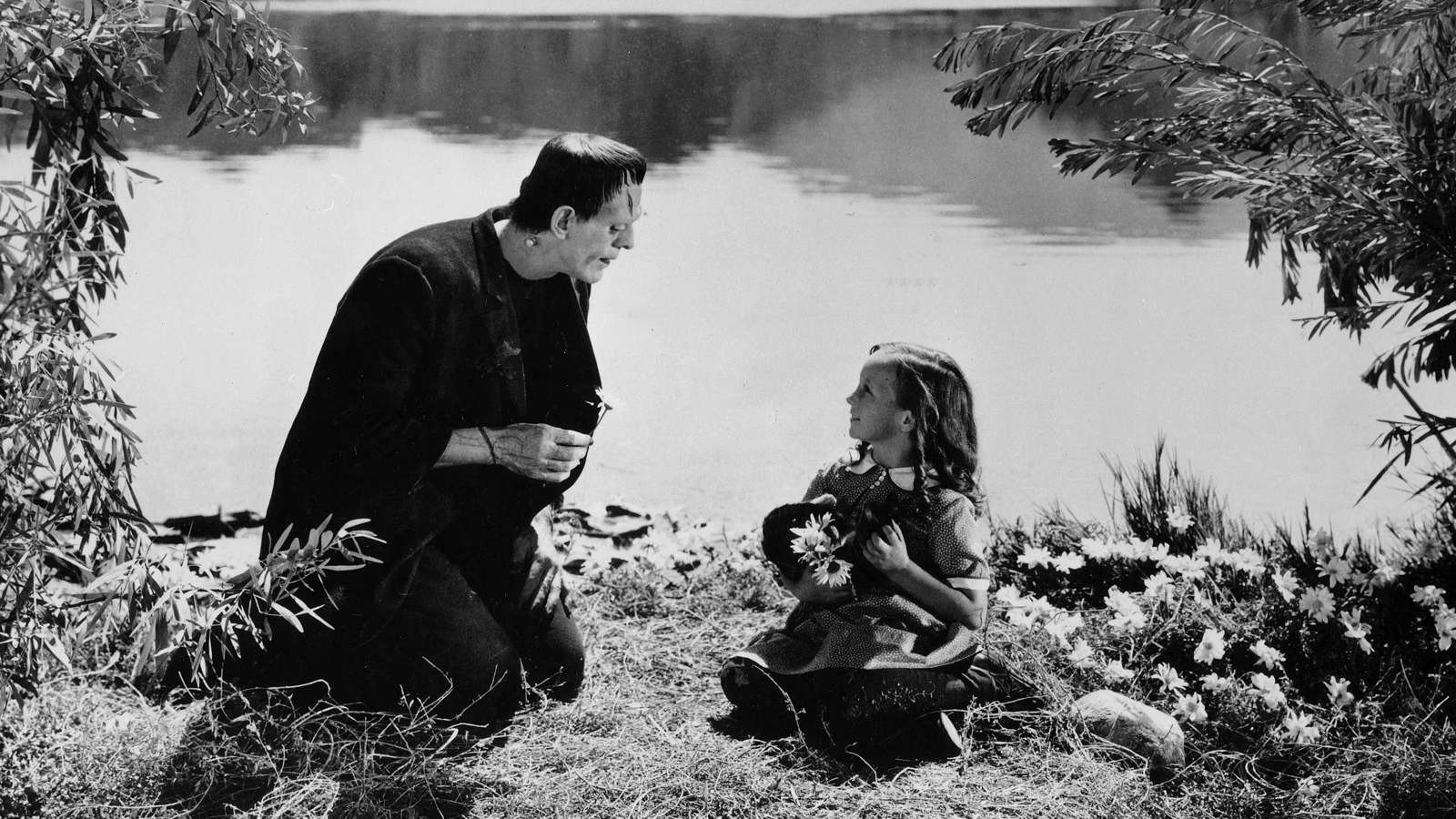
A crazed scientist creates a living being from body parts, not realizing it has a madman's brain.

Release Date: November 21, 1931
Release Time: 71 minutes

Director: James Whale

Cast:
Colin Clive as Henry Frankenstein
Mae Clarke as Elizabeth Lavenza
John Boles as Victor Moritz
Boris Karloff as Frankenstein's monster
Edward Van Sloan as Dr. Waldman
Frederick Kerr as Baron Frankenstein
Dwight Frye as Fritz
Lionel Belmore as Herr Vogel, the Burgomaster
Marilyn Harris as Little Maria
Michael Mark as Ludwig, Maria's father


Trailer

Clips


1931  /  1957  /  1994


Author Bio:
Mary Shelley (1797-1851), the only daughter of writers William Godwin and Mary Wollstonecraft, and wife of Percy Bysshe Shelley, is the critically acclaimed author of Frankenstein, Valperga, and The Last Man, in addition to many other works. Mary Shelley’s writings reflect and were influenced by a number of literary traditions including Gothic and Romantic ideals, and Frankenstein is widely regarded as the first modern work of science fiction. Today’s scholarship of Mary Shelley’s writings reveal her to be a political radical, as demonstrated though recurring themes of cooperation and sympathy, particularly among women, in her work, which are in direct conflict with the individual Romantic ideals of the eighteenth and nineteenth centuries.


B&N  /  KOBO  /  CHIRP  /  AUDIBLE

Film
B&N  /  AFI  /  ALL MOVIE
WIKI  /  IMDB  /  TCM


Friday, October 23, 2020

πŸ“˜πŸŽ₯Friday's Film AdaptationπŸŽ₯πŸ“˜: Frankenstein by Mary Shelley


Summary:
Mary Shelley began writing Frankenstein when she was only eighteen. At once a Gothic thriller, a passionate romance, and a cautionary tale about the dangers of science, Frankenstein tells the story of committed science student Victor Frankenstein. Obsessed with discovering the cause of generation and life and bestowing animation upon lifeless matter, Frankenstein assembles a human being from stolen body parts but; upon bringing it to life, he recoils in horror at the creature's hideousness. Tormented by isolation and loneliness, the once-innocent creature turns to evil and unleashes a campaign of murderous revenge against his creator, Frankenstein.

Frankenstein, an instant bestseller and an important ancestor of both the horror and science fiction genres, not only tells a terrifying story, but also raises profound, disturbing questions about the very nature of life and the place of humankind within the cosmos: What does it mean to be human? What responsibilities do we have to each other? How far can we go in tampering with Nature? In our age, filled with news of organ donation genetic engineering, and bio-terrorism, these questions are more relevant than ever.


Chapter 16
“Cursed, cursed creator! Why did I live? Why, in that instant, did I not extinguish the spark of existence which you had so wantonly bestowed? I know not; despair had not yet taken possession of me; my feelings were those of rage and revenge. I could with pleasure have destroyed the cottage and its inhabitants and have glutted myself with their shrieks and misery.

“When night came I quitted my retreat and wandered in the wood; and now, no longer restrained by the fear of discovery, I gave vent to my anguish in fearful howlings. I was like a wild beast that had broken the toils, destroying the objects that obstructed me and ranging through the wood with a stag-like swiftness. Oh! What a miserable night I passed! The cold stars shone in mockery, and the bare trees waved their branches above me; now and then the sweet voice of a bird burst forth amidst the universal stillness. All, save I, were at rest or in enjoyment; I, like the arch-fiend, bore a hell within me, and finding myself unsympathized with, wished to tear up the trees, spread havoc and destruction around me, and then to have sat down and enjoyed the ruin.

“But this was a luxury of sensation that could not endure; I became fatigued with excess of bodily exertion and sank on the damp grass in the sick impotence of despair. There was none among the myriads of men that existed who would pity or assist me; and should I feel kindness towards my enemies? No; from that moment I declared everlasting war against the species, and more than all, against him who had formed me and sent me forth to this insupportable misery.

“The sun rose; I heard the voices of men and knew that it was impossible to return to my retreat during that day. Accordingly I hid myself in some thick underwood, determining to devote the ensuing hours to reflection on my situation.

“The pleasant sunshine and the pure air of day restored me to some degree of tranquillity; and when I considered what had passed at the cottage, I could not help believing that I had been too hasty in my conclusions. I had certainly acted imprudently. It was apparent that my conversation had interested the father in my behalf, and I was a fool in having exposed my person to the horror of his children. I ought to have familiarized the old De Lacey to me, and by degrees to have discovered myself to the rest of his family, when they should have been prepared for my approach. But I did not believe my errors to be irretrievable, and after much consideration I resolved to return to the cottage, seek the old man, and by my representations win him to my party.

“These thoughts calmed me, and in the afternoon I sank into a profound sleep; but the fever of my blood did not allow me to be visited by peaceful dreams. The horrible scene of the preceding day was forever acting before my eyes; the females were flying and the enraged Felix tearing me from his father’s feet. I awoke exhausted, and finding that it was already night, I crept forth from my hiding-place, and went in search of food.

“When my hunger was appeased, I directed my steps towards the well-known path that conducted to the cottage. All there was at peace. I crept into my hovel and remained in silent expectation of the accustomed hour when the family arose. That hour passed, the sun mounted high in the heavens, but the cottagers did not appear. I trembled violently, apprehending some dreadful misfortune. The inside of the cottage was dark, and I heard no motion; I cannot describe the agony of this suspense.

“Presently two countrymen passed by, but pausing near the cottage, they entered into conversation, using violent gesticulations; but I did not understand what they said, as they spoke the language of the country, which differed from that of my protectors. Soon after, however, Felix approached with another man; I was surprised, as I knew that he had not quitted the cottage that morning, and waited anxiously to discover from his discourse the meaning of these unusual appearances.

“‘Do you consider,’ said his companion to him, ‘that you will be obliged to pay three months’ rent and to lose the produce of your garden? I do not wish to take any unfair advantage, and I beg therefore that you will take some days to consider of your determination.’

“‘It is utterly useless,’ replied Felix; ‘we can never again inhabit your cottage. The life of my father is in the greatest danger, owing to the dreadful circumstance that I have related. My wife and my sister will never recover from their horror. I entreat you not to reason with me any more. Take possession of your tenement and let me fly from this place.’

“Felix trembled violently as he said this. He and his companion entered the cottage, in which they remained for a few minutes, and then departed. I never saw any of the family of De Lacey more.

“I continued for the remainder of the day in my hovel in a state of utter and stupid despair. My protectors had departed and had broken the only link that held me to the world. For the first time the feelings of revenge and hatred filled my bosom, and I did not strive to control them, but allowing myself to be borne away by the stream, I bent my mind towards injury and death. When I thought of my friends, of the mild voice of De Lacey, the gentle eyes of Agatha, and the exquisite beauty of the Arabian, these thoughts vanished and a gush of tears somewhat soothed me. But again when I reflected that they had spurned and deserted me, anger returned, a rage of anger, and unable to injure anything human, I turned my fury towards inanimate objects. As night advanced I placed a variety of combustibles around the cottage, and after having destroyed every vestige of cultivation in the garden, I waited with forced impatience until the moon had sunk to commence my operations.

“As the night advanced, a fierce wind arose from the woods and quickly dispersed the clouds that had loitered in the heavens; the blast tore along like a mighty avalanche and produced a kind of insanity in my spirits that burst all bounds of reason and reflection. I lighted the dry branch of a tree and danced with fury around the devoted cottage, my eyes still fixed on the western horizon, the edge of which the moon nearly touched. A part of its orb was at length hid, and I waved my brand; it sank, and with a loud scream I fired the straw, and heath, and bushes, which I had collected. The wind fanned the fire, and the cottage was quickly enveloped by the flames, which clung to it and licked it with their forked and destroying tongues.

“As soon as I was convinced that no assistance could save any part of the habitation, I quitted the scene and sought for refuge in the woods.

“And now, with the world before me, whither should I bend my steps? I resolved to fly far from the scene of my misfortunes; but to me, hated and despised, every country must be equally horrible. At length the thought of you crossed my mind. I learned from your papers that you were my father, my creator; and to whom could I apply with more fitness than to him who had given me life? Among the lessons that Felix had bestowed upon Safie, geography had not been omitted; I had learned from these the relative situations of the different countries of the earth. You had mentioned Geneva as the name of your native town, and towards this place I resolved to proceed.

“But how was I to direct myself? I knew that I must travel in a southwesterly direction to reach my destination, but the sun was my only guide. I did not know the names of the towns that I was to pass through, nor could I ask information from a single human being; but I did not despair. From you only could I hope for succour, although towards you I felt no sentiment but that of hatred. Unfeeling, heartless creator! You had endowed me with perceptions and passions and then cast me abroad an object for the scorn and horror of mankind. But on you only had I any claim for pity and redress, and from you I determined to seek that justice which I vainly attempted to gain from any other being that wore the human form.

“My travels were long and the sufferings I endured intense. It was late in autumn when I quitted the district where I had so long resided. I travelled only at night, fearful of encountering the visage of a human being. Nature decayed around me, and the sun became heatless; rain and snow poured around me; mighty rivers were frozen; the surface of the earth was hard and chill, and bare, and I found no shelter. Oh, earth! How often did I imprecate curses on the cause of my being! The mildness of my nature had fled, and all within me was turned to gall and bitterness. The nearer I approached to your habitation, the more deeply did I feel the spirit of revenge enkindled in my heart. Snow fell, and the waters were hardened, but I rested not. A few incidents now and then directed me, and I possessed a map of the country; but I often wandered wide from my path. The agony of my feelings allowed me no respite; no incident occurred from which my rage and misery could not extract its food; but a circumstance that happened when I arrived on the confines of Switzerland, when the sun had recovered its warmth and the earth again began to look green, confirmed in an especial manner the bitterness and horror of my feelings.

“I generally rested during the day and travelled only when I was secured by night from the view of man. One morning, however, finding that my path lay through a deep wood, I ventured to continue my journey after the sun had risen; the day, which was one of the first of spring, cheered even me by the loveliness of its sunshine and the balminess of the air. I felt emotions of gentleness and pleasure, that had long appeared dead, revive within me. Half surprised by the novelty of these sensations, I allowed myself to be borne away by them, and forgetting my solitude and deformity, dared to be happy. Soft tears again bedewed my cheeks, and I even raised my humid eyes with thankfulness towards the blessed sun, which bestowed such joy upon me.

“I continued to wind among the paths of the wood, until I came to its boundary, which was skirted by a deep and rapid river, into which many of the trees bent their branches, now budding with the fresh spring. Here I paused, not exactly knowing what path to pursue, when I heard the sound of voices, that induced me to conceal myself under the shade of a cypress. I was scarcely hid when a young girl came running towards the spot where I was concealed, laughing, as if she ran from someone in sport. She continued her course along the precipitous sides of the river, when suddenly her foot slipped, and she fell into the rapid stream. I rushed from my hiding-place and with extreme labour, from the force of the current, saved her and dragged her to shore. She was senseless, and I endeavoured by every means in my power to restore animation, when I was suddenly interrupted by the approach of a rustic, who was probably the person from whom she had playfully fled. On seeing me, he darted towards me, and tearing the girl from my arms, hastened towards the deeper parts of the wood. I followed speedily, I hardly knew why; but when the man saw me draw near, he aimed a gun, which he carried, at my body and fired. I sank to the ground, and my injurer, with increased swiftness, escaped into the wood.

“This was then the reward of my benevolence! I had saved a human being from destruction, and as a recompense I now writhed under the miserable pain of a wound which shattered the flesh and bone. The feelings of kindness and gentleness which I had entertained but a few moments before gave place to hellish rage and gnashing of teeth. Inflamed by pain, I vowed eternal hatred and vengeance to all mankind. But the agony of my wound overcame me; my pulses paused, and I fainted.

“For some weeks I led a miserable life in the woods, endeavouring to cure the wound which I had received. The ball had entered my shoulder, and I knew not whether it had remained there or passed through; at any rate I had no means of extracting it. My sufferings were augmented also by the oppressive sense of the injustice and ingratitude of their infliction. My daily vows rose for revenge—a deep and deadly revenge, such as would alone compensate for the outrages and anguish I had endured.

“After some weeks my wound healed, and I continued my journey. The labours I endured were no longer to be alleviated by the bright sun or gentle breezes of spring; all joy was but a mockery which insulted my desolate state and made me feel more painfully that I was not made for the enjoyment of pleasure.

“But my toils now drew near a close, and in two months from this time I reached the environs of Geneva.

“It was evening when I arrived, and I retired to a hiding-place among the fields that surround it to meditate in what manner I should apply to you. I was oppressed by fatigue and hunger and far too unhappy to enjoy the gentle breezes of evening or the prospect of the sun setting behind the stupendous mountains of Jura.

“At this time a slight sleep relieved me from the pain of reflection, which was disturbed by the approach of a beautiful child, who came running into the recess I had chosen, with all the sportiveness of infancy. Suddenly, as I gazed on him, an idea seized me that this little creature was unprejudiced and had lived too short a time to have imbibed a horror of deformity. If, therefore, I could seize him and educate him as my companion and friend, I should not be so desolate in this peopled earth.

“Urged by this impulse, I seized on the boy as he passed and drew him towards me. As soon as he beheld my form, he placed his hands before his eyes and uttered a shrill scream; I drew his hand forcibly from his face and said, ‘Child, what is the meaning of this? I do not intend to hurt you; listen to me.’

“He struggled violently. ‘Let me go,’ he cried; ‘monster! Ugly wretch! You wish to eat me and tear me to pieces. You are an ogre. Let me go, or I will tell my papa.’

“‘Boy, you will never see your father again; you must come with me.’

“‘Hideous monster! Let me go. My papa is a syndic—he is M. Frankenstein—he will punish you. You dare not keep me.’

“‘Frankenstein! you belong then to my enemy—to him towards whom I have sworn eternal revenge; you shall be my first victim.’

“The child still struggled and loaded me with epithets which carried despair to my heart; I grasped his throat to silence him, and in a moment he lay dead at my feet.

“I gazed on my victim, and my heart swelled with exultation and hellish triumph; clapping my hands, I exclaimed, ‘I too can create desolation; my enemy is not invulnerable; this death will carry despair to him, and a thousand other miseries shall torment and destroy him.’

“As I fixed my eyes on the child, I saw something glittering on his breast. I took it; it was a portrait of a most lovely woman. In spite of my malignity, it softened and attracted me. For a few moments I gazed with delight on her dark eyes, fringed by deep lashes, and her lovely lips; but presently my rage returned; I remembered that I was forever deprived of the delights that such beautiful creatures could bestow and that she whose resemblance I contemplated would, in regarding me, have changed that air of divine benignity to one expressive of disgust and affright.

“Can you wonder that such thoughts transported me with rage? I only wonder that at that moment, instead of venting my sensations in exclamations and agony, I did not rush among mankind and perish in the attempt to destroy them.

“While I was overcome by these feelings, I left the spot where I had committed the murder, and seeking a more secluded hiding-place, I entered a barn which had appeared to me to be empty. A woman was sleeping on some straw; she was young, not indeed so beautiful as her whose portrait I held, but of an agreeable aspect and blooming in the loveliness of youth and health. Here, I thought, is one of those whose joy-imparting smiles are bestowed on all but me. And then I bent over her and whispered, ‘Awake, fairest, thy lover is near—he who would give his life but to obtain one look of affection from thine eyes; my beloved, awake!’

“The sleeper stirred; a thrill of terror ran through me. Should she indeed awake, and see me, and curse me, and denounce the murderer? Thus would she assuredly act if her darkened eyes opened and she beheld me. The thought was madness; it stirred the fiend within me—not I, but she, shall suffer; the murder I have committed because I am forever robbed of all that she could give me, she shall atone. The crime had its source in her; be hers the punishment! Thanks to the lessons of Felix and the sanguinary laws of man, I had learned now to work mischief. I bent over her and placed the portrait securely in one of the folds of her dress. She moved again, and I fled.

“For some days I haunted the spot where these scenes had taken place, sometimes wishing to see you, sometimes resolved to quit the world and its miseries forever. At length I wandered towards these mountains, and have ranged through their immense recesses, consumed by a burning passion which you alone can gratify. We may not part until you have promised to comply with my requisition. I am alone and miserable; man will not associate with me; but one as deformed and horrible as myself would not deny herself to me. My companion must be of the same species and have the same defects. This being you must create.”


A scientist's attempts to create life unleash a bloodthirsty monster.

Release Date: May 20, 1957
Release Time: 83 minutes

Cast:
Peter Cushing as Baron Victor Frankenstein
Melvyn Hayes as Young Victor
Robert Urquhart as Paul Krempe
Hazel Court as Elizabeth
Sally Walsh as Young Elizabeth
Christopher Lee as The Creature
Valerie Gaunt as Justine
Noel Hood as Aunt Sophia
Paul Hardtmuth as Professor Bernstein
Fred Johnson as Grandpa
Alex Gallier as Priest
Claude Kingston as Little Boy
Michael Mulcaster as Warder
Andrew Leigh as Burgomaster
Ann Blake as Wife
Middleton Woods as Lecturer
Raymond Ray as Uncle


1931  /  1957  /  1994


Author Bio:
Mary Shelley (1797-1851), the only daughter of writers William Godwin and Mary Wollstonecraft, and wife of Percy Bysshe Shelley, is the critically acclaimed author of Frankenstein, Valperga, and The Last Man, in addition to many other works. Mary Shelley’s writings reflect and were influenced by a number of literary traditions including Gothic and Romantic ideals, and Frankenstein is widely regarded as the first modern work of science fiction. Today’s scholarship of Mary Shelley’s writings reveal her to be a political radical, as demonstrated though recurring themes of cooperation and sympathy, particularly among women, in her work, which are in direct conflict with the individual Romantic ideals of the eighteenth and nineteenth centuries.


GOOGLE PLAY  /  IMDB  /  KOBO
B&N  /  iTUNES  /  AUDIBLE  /  INDIE BOUND
AMAZON  /  WIKI  /  GOODREADS


Film
AMAZON US  /  AMAZON UK  /  BFI
ALL MOVIE  /  WIKI  /  IMDB  /  TCM